
Predictive maintenance is a maintenance strategy that uses the measured condition of equipment to decide when to service it, doing the work when the data indicates a failure is coming rather than on a fixed calendar. The idea is old, the tooling is new. A skilled engineer listening to a motor and knowing it is about to fail was doing predictive maintenance by ear. What changed is that the listening is now done continuously, at scale, by sensors and software instead of one expert on one machine.
It helps to place it against the two strategies people already know. Reactive maintenance waits for equipment to break, then fixes it, which is cheap to run and expensive when it fails. Preventive maintenance services on a fixed schedule, which is predictable but blind to the asset's actual state. Predictive maintenance services on condition, which lines the work up with reality. For the cost comparison across a real portfolio, see preventive vs predictive maintenance.
How predictive maintenance works, step by step
The mechanism is a short, repeatable loop.
- 01Collect condition data. Sensors, meters, and building automation systems continuously read signals that reflect an asset’s health: vibration, temperature, run current, pressure, and similar. Where sensors are absent, disciplined inspection readings do the same job less often.
- 02Compare to a baseline. The software learns what "healthy" looks like for that specific asset and watches for drift away from it. The baseline is per asset, because a normal reading on one unit is a warning sign on another.
- 03Detect the signal. When the data drifts in a way that historically precedes failure, the system flags it. This is the difference between noise and a real trend, and it is where the reliability history of your own assets matters.
- 04Alert. The flag becomes a notification to the team responsible, with enough context to judge urgency.
- 05Act. The alert becomes a scheduled repair, done in a chosen window before the failure, by the right vendor. Without this last step, predictive maintenance is just a dashboard nobody acts on.
Why the timing is the whole point
Everything predictive maintenance saves comes from timing. A failing rooftop unit caught three weeks early is a scheduled Tuesday repair at standard rates. The same unit run to failure is a Saturday emergency over an open store, at premium rates, with spoiled stock and lost trade on top. Same repair, very different bill. That is why predictive earns its place on high-value assets whose condition is measurable, and why it is wasted on cheap equipment you could simply replace when it dies. The judgment about which assets deserve it is the real skill, and it is covered in predictive maintenance software and, at the portfolio level, in asset performance management.
For a company running hundreds of locations, predictive maintenance is a budgeting advantage before it is a technology one. Knowing which failures are coming turns an unpredictable emergency line into a plannable, schedulable cost, which is exactly the shift REAL's facilities agent is built to make across a portfolio. The fuller version of that argument is in what predictive maintenance actually saves across multi-site portfolios.
FAQ
What is predictive maintenance in simple terms?
- It is servicing equipment based on its actual measured condition instead of a fixed schedule or a breakdown. Sensors and software watch an asset’s health and flag it for repair when the data shows failure is approaching, so the work happens before the failure, on your terms.
What is the difference between predictive and preventive maintenance?
- Preventive maintenance services on a calendar or run-hours interval regardless of condition. Predictive maintenance services on measured condition, doing the work only when the data indicates it is needed. Preventive is a schedule; predictive is evidence.
What equipment is predictive maintenance best for?
- Assets whose condition can be measured and whose failure is expensive: HVAC and rooftop units, commercial refrigeration, elevators, and electrical infrastructure. It is not worth the monitoring cost on cheap assets you can simply replace when they fail.
Does predictive maintenance require sensors?
- Often, but not always. Continuous sensors are ideal for high-value assets, but building automation feeds, meter data, and disciplined manual inspection also provide condition signals. Many programs start with the data they already have and add sensors where early warning clearly pays.
More From Our Blog
More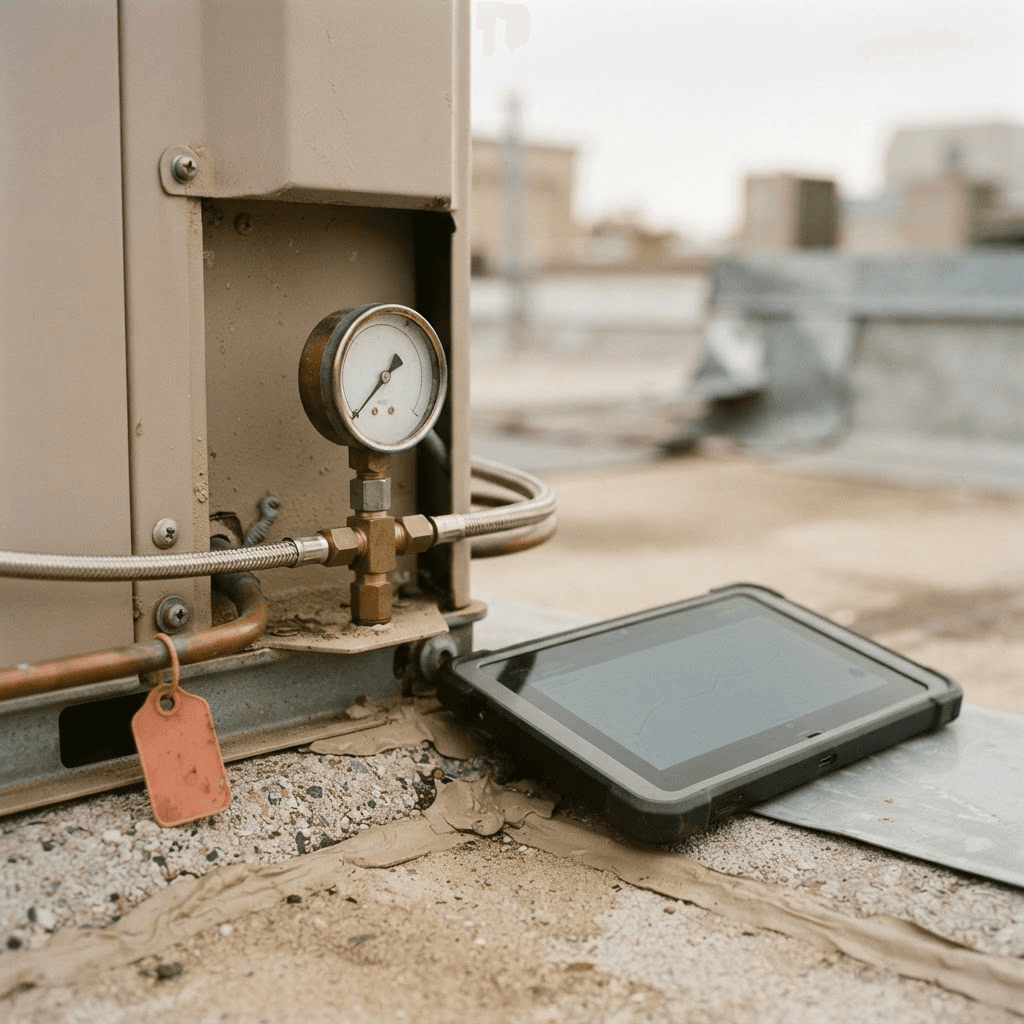
Predictive maintenance for multi-site portfolios: what it actually saves
Predictive maintenance is a budgeting advantage before it is a technology one. Here is what it saves across a leased, multi-site portfolio.

Preventive vs predictive maintenance: which lowers cost across a portfolio?
Preventive bills on a calendar; predictive bills on condition. Here is which lowers cost across a multi-site portfolio, and where each one wins.

The 8 best enterprise asset management software options for multi-site occupiers in 2026
Enterprise asset management software was built for the factory floor. Here are the 8 best options for multi-site occupiers in 2026, ranked.

Initial agents live in two weeks.
Start with one or two high-value workflows, connect the required data and documents, measure the result, then expand across domains.
- A tailored onboarding for every enterprise.
- Fitted to how you actually work.
- Continuous support as your portfolio evolves.