REAL at CoreNetMeet REAL at CoreNetOct 26–28ChicagoBooth #508
Meet UsBook a MeetingREAL connects the insurance requirements in leases and contracts to the policies, certificates and property evidence behind each location, then keeps both sides current as agreements and conditions change.
Get a dedicated demoA check of 1,860 certificates against the insurance requirements in each governing lease found 47 locations that need action. Expiring soon: 21 COIs lapse within 60 days, including 6 in the next 14 days. Limit gaps: 14 certificates show $1M general liability where the lease requires $2M. Missing language: 9 certificates omit the additional-insured wording the lease specifies. Requirement changes: 3 amendments raised required limits that current certificates do not yet meet. Would you like me to send renewal and correction requests to each tenant and vendor?

Each REAL agent is an expert in its domain, built to share context and act on what the others know. The more agents work in your portfolio, the more complete each one’s view of it becomes, and the stronger every decision your team makes.
Premiums track the risk profile underwriters can see, so the lever is an accurate, current picture of every property rather than a stale schedule of values. When condition, occupancy, and exposure are documented and up to date, you negotiate from evidence. REAL maintains a continuously updated risk profile per location to support underwriting and reduce avoidable premium.
Risk changes as buildings change, so a once-a-year snapshot drifts out of date almost immediately. The fix is to keep the profile tied to live operational and condition data per location. REAL updates each property’s risk picture continuously from the same record the rest of the platform runs on, so what the insurer sees matches what is actually there.
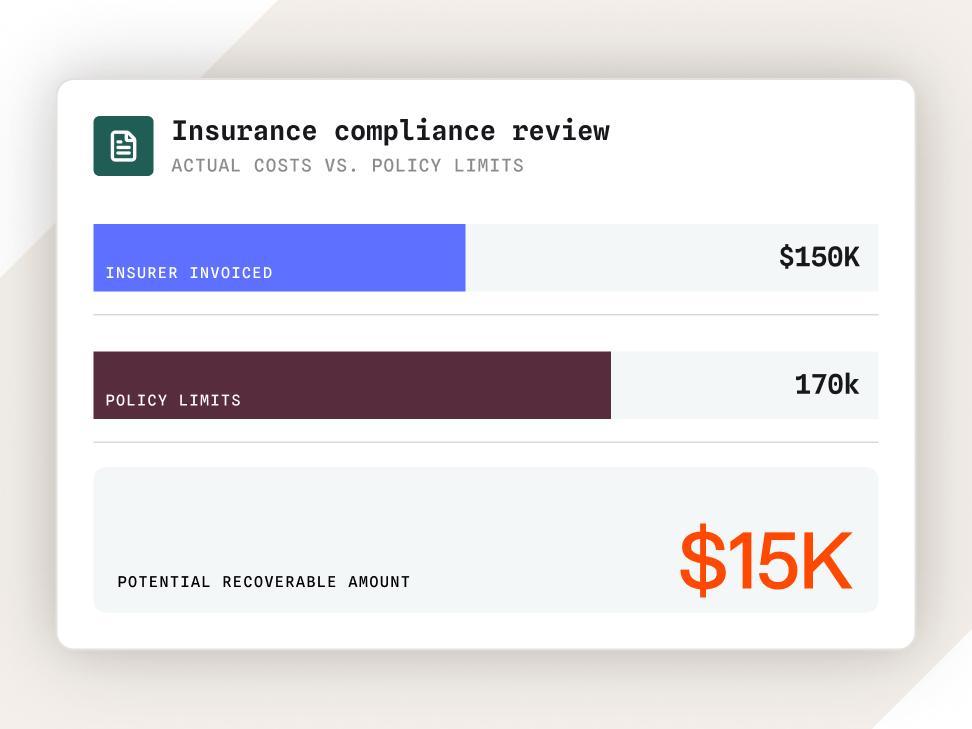
The same way you catch any pass-through error: check what was billed against what the policy and the property actually justify. REAL audits premiums and exposure against the underlying record and flags discrepancies with the source attached, so a question to the broker is backed by evidence rather than a hunch.
Start with one or two high-value workflows, connect the required data and documents, measure the result, then expand across domains.