
For development and construction leaders
Deliver every build with stronger plans, tighter bids, and lower costs.
Get a dedicated demo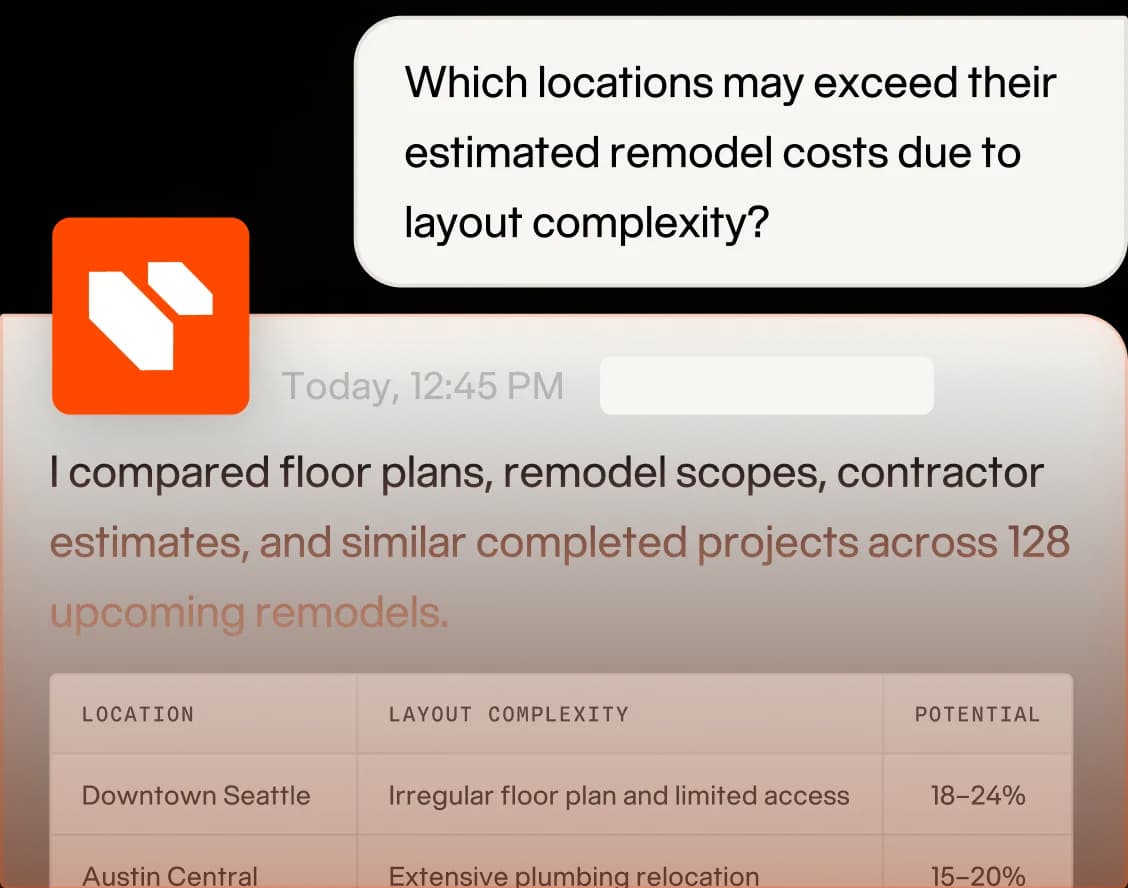
REAL at CoreNetMeet REAL at CoreNetOct 26–28ChicagoBooth #508
Meet UsBook a Meeting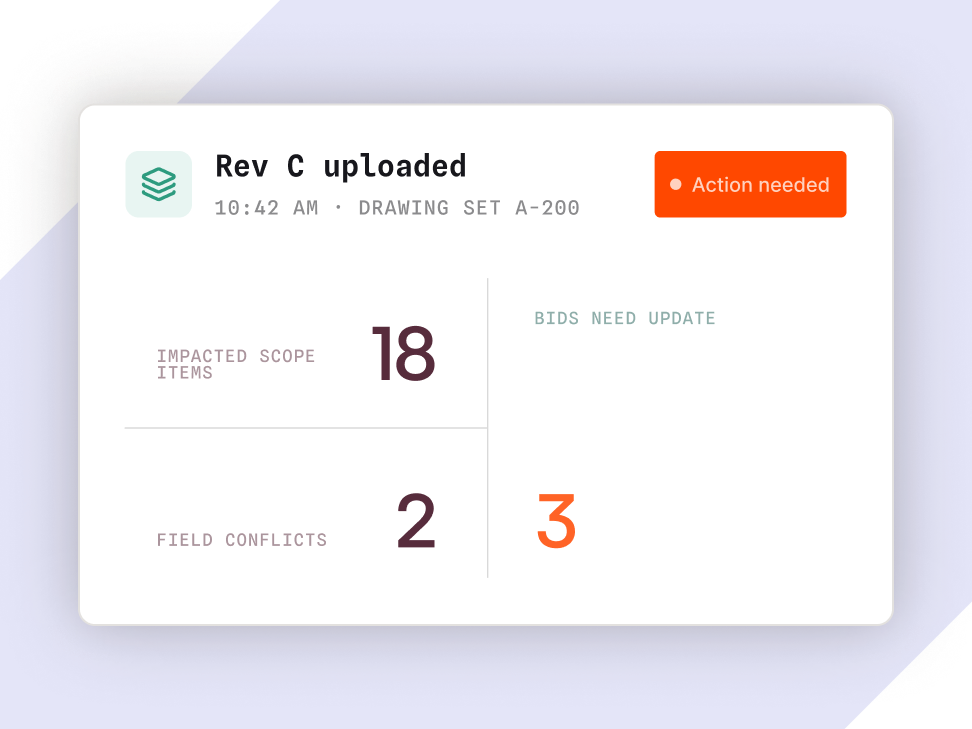


8M+
tasks processed
REAL compares each build's costs and vendor performance against your full portfolio, so leadership can see which projects are running above range and exactly what it would take to bring them in line before more capital is committed.

Every plan and specification read the moment it changes.
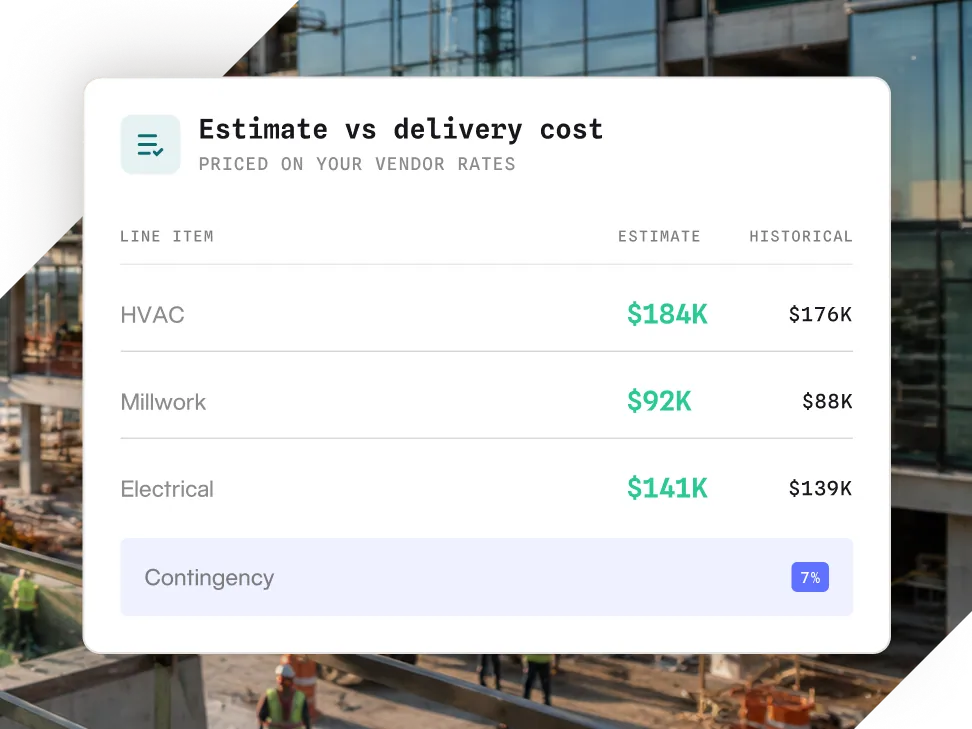
Every bid measured against your full vendor track record.

A project still needs approvals, vendors, a working schedule, coordinated installations and a complete handoff before anyone can occupy the space.
REAL connects project milestones, responsibilities, site requirements and delivery information with the drawings, estimates, bids and costs already used by the construction team.
From the first site assessment through opening, project managers can keep the work moving and carry the completed record into facilities.
10 agents
REAL connects plans, specifications, standards, estimates, bids, contracts, schedules and project history so construction teams can plan, price, coordinate and control delivery through opening and closeout.
Each REAL agent is an expert in its domain, built to share context and act on what the others know. The more agents work in your portfolio, the more complete each one’s view of it becomes, and the stronger every decision your team makes.

 FacilitiesRight issue. Right owner. Right action.Connect asset condition, service history, contracts, work orders and site context to prevent failures and route the work that needs attention.Explore Facilities

 ConstructionCatch the gap before it becomes cost.Connect drawings, standards, estimates, bids, scope, contracts and project history from first plan through final cost.Explore Construction

 Portfolio StrategyRun the portfolio decision across every location.Combine economics, leases, physical feasibility, operations, market context and external constraints to rank what to do next.Explore Portfolio Strategy

 Lease AccountingFrom ASC 842 to every lease-related payment.Maintain lease accounting, validate CAM and rent changes, control payments and trace every calculation back to the governing source.Explore Lease Accounting

 Lease AdministrationTurn every lease term into action.Keep rights, obligations, dates, notices and recoveries current across the full lease portfolio, with the governing clause attached to every action.Explore Lease Administration
Overruns usually start as scope gaps and unverified change orders that nobody caught early. The control is structured visibility: every bid, plan, and change order read against the others and against what similar projects actually cost. REAL structures build plans and documents, benchmarks costs across your portfolio and the market, and tracks budget against actuals so a problem shows up while it is still cheap to fix.
Compare them line by line against each other and against what comparable projects in your own portfolio paid, not against a single market average. REAL reads bid sets, compares contractor bids, benchmarks against portfolio and market rates, and scores vendor performance, so the award decision rests on evidence rather than the lowest headline number.
By reading the documents closely enough to find what is missing, which is hard to do by hand across many projects. REAL detects scope gaps and exclusions before they turn into change orders and verifies the change orders that do come through, so surprises are caught at the document stage instead of the invoice stage.
By comparing the bid set to the as-built and flagging every deviation. Done manually this is slow and easy to skip, which is how omissions slip through. REAL compares plans to as-builts and surfaces deviations and compliance risk in real time, so what you paid for is what got delivered.
Drawings are the source of truth for a build, but the quantities are locked inside CAD files that most software cannot read. REAL runs a takeoff pipeline that reads CAD drawings, including DWG and DXF, finds and clusters the labels and annotations, renders them, and builds an evidence-backed report. Every count and quantity links back to the spot on the drawing it came from, so the takeoff is something your team can verify rather than a black-box number.
A budget is only useful if it reflects what is actually coming, including the change orders that have not been approved yet. REAL tracks budget against actuals across the project and factors verified and pending change orders into the projected final cost, so the number your team is working from is the real one, not the one from the original bid.
A change order is rarely just a line-item cost. It can expand scope, move the budget, and put substantial completion or the opening date at risk. REAL verifies each change order, shows its cost and scope impact against the contract, and flags the ones that threaten the schedule, so the decision to approve is made with the full picture rather than after the fact.
Fair pricing is a comparison problem: what did this trade or line item cost on comparable projects, and is this number an outlier. REAL benchmarks change order pricing against your portfolio history and market rates and flags outliers by trade or line item, so a push-back on price is backed by evidence rather than instinct.
REAL connects project records, responsible teams, milestones, documents and delivery dependencies so managers can review what is progressing, what needs attention and what is blocking completion. It works alongside the existing estimating, bid evaluation and cost-control agents.
Scope creep shows up as a pattern, not a single change order: a run of changes that suggests work which should have been in the base scope. REAL identifies those patterns across a project and surfaces them, so a string of small additions does not quietly become a large overrun.
Start with one or two high-value workflows, connect the required data and documents, measure the result, then expand across domains.
