Published:
Last updated:
Warehouse facility management when you are the tenant
In a leased distribution centre, the lease decides who fixes the roof, the dock levellers and the sprinklers. Most tenants find out too late.
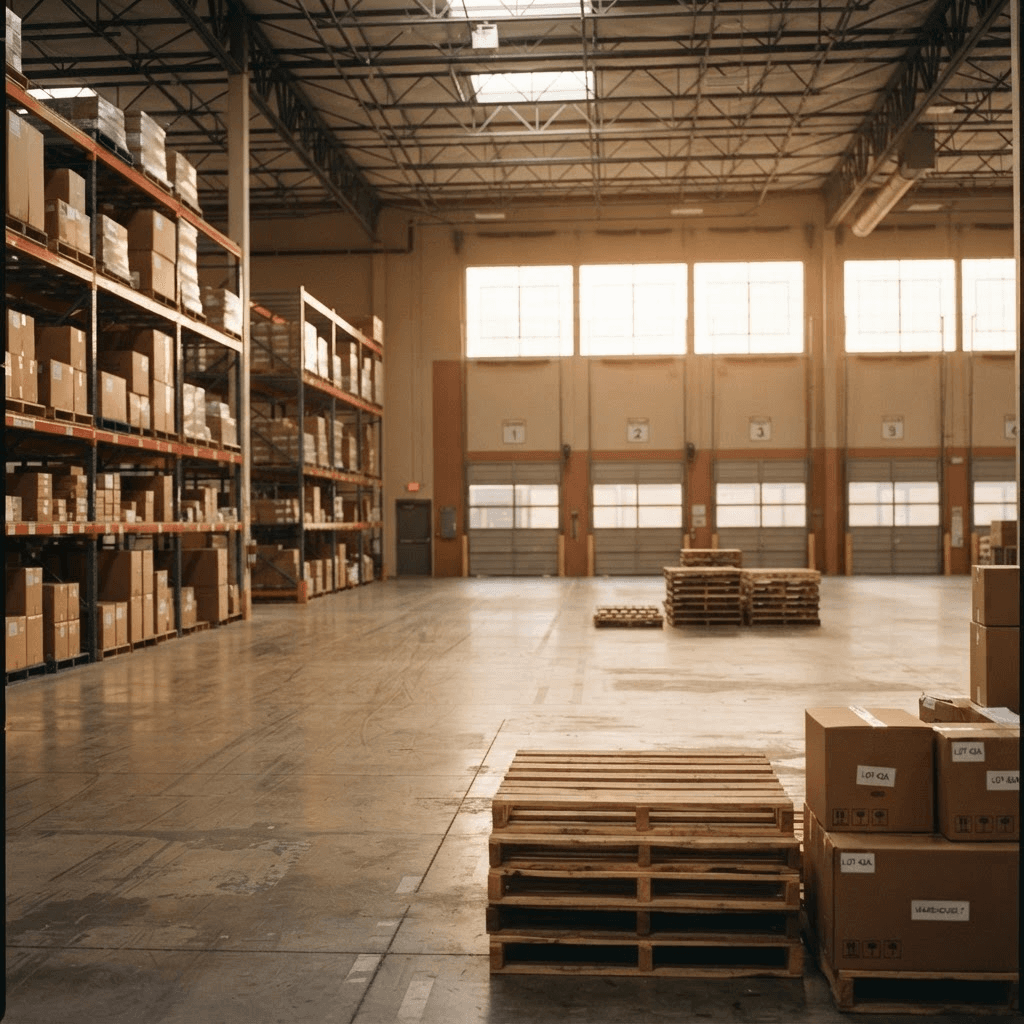
Warehouse facility management covers the systems that keep a distribution centre running: fire protection, dock equipment, roof and building envelope, the slab, HVAC, lighting, racking, and the yard and truck court outside. In an owned building the question is how to maintain them well. In a leased one, the first question is who is responsible, and the answer is whatever the lease says.
Why industrial leases split responsibility differently
Industrial leases are commonly triple net, and the net tends to be netter than in other asset classes. Industrial buildings are often single-tenant, so there is no common area to share, and industrial leases run long, which makes landlords comfortable transferring lifecycle cost to a tenant who will be there for most of the asset’s remaining life. Assumptions carried over from a retail or office portfolio will be wrong; read the lease for each building.
The responsibility matrix
| System | Usual assignment | Where it goes wrong |
|---|---|---|
| Structure, foundation, slab | Landlord | Slab damage from forklifts and racking gets pushed back as tenant-caused |
| Roof | Split: landlord structure, tenant repairs | “Structural” vs “repair” is rarely defined, and a failing membrane sits in the gap |
| Exterior walls and envelope | Landlord | Dock bumper and trailer damage treated as tenant-caused |
| Fire protection system | Landlord owns it, tenant’s use governs the design | Changing what you store can change what the system must be |
| Dock levellers, doors, seals, restraints | Tenant | Highest-cycle, highest-failure equipment in the building |
| HVAC, warehouse | Tenant | Replacement cost lands late in the term with no amortization relief |
| Racking and material handling | Tenant, as tenant property | Permits and inspections assumed to sit with the building |
| Yard, truck court, paving | Varies widely | Sometimes CAM, sometimes tenant, frequently unclear |
The roof and the slab carry the most cost. A membrane at the end of its life is neither obviously structural nor obviously a repair, and the argument arrives exactly when the cost is largest; negotiate a stated threshold or amortization mechanism rather than relying on the adjectives. A condition record at handover, with photographs, is the cheapest insurance against slab damage being characterised as tenant-caused years later.
Fire protection follows what you store
The landlord usually owns the sprinkler system as a building system and maintains it. What the system is required to be, however, depends on your operation. The National Fire Sprinkler Association, writing on high-piled storage under NFPA 13, notes that "the square footage of the high-piled storage area, along with the commodity classification, are used to determine when sprinklers are required and the overall design," and that classification depends on "the product, the packaging, and the type of pallets used." Source: National Fire Sprinkler Association.
A new product line, a shift in packaging, or a switch from wooden to plastic pallets are ordinary operational decisions that touch the inputs determining classification, and the system installed for the building’s original design basis does not change when your storage does. Check classification before a product mix, packaging, or pallet change, not after, and treat it as a real estate question. This is squarely facilities compliance and safety territory.
Racking is yours, with its own regime
Racking is almost always tenant property rather than a building system. It carries its own permitting, since a permitted configuration reflects the racking layout, aisle widths, and commodity classification as approved. It carries its own inspection obligation, since damaged uprights and beams are a live safety exposure and a common insurer requirement. And it comes out at the end, usually within your make-good obligation, which makes it part of the location exit process.
What to check, and when
Before signing, read for the roof threshold, the slab damage language, the HVAC replacement obligation, whether the yard sits in CAM or with you, and what the lease says about changes in use affecting fire protection. During the term, run dock equipment on a planned cycle, keep racking inspection on a schedule with a damage-reporting route, and route any product or pallet change through a fire protection check before it reaches the floor. For yard, paving, and snow costs that arrive as CAM, apply the same scrutiny as any other CAM audit.
More for logistics operators and across facilities and maintenance.
Frequently asked questions
Who is responsible for the roof in an industrial lease?
- It is usually split, with the landlord holding structural elements and the tenant holding repairs, and the split is frequently undefined. Negotiate a stated cost threshold or an amortization mechanism rather than relying on the words structural and repair to do the work.
Does the tenant maintain the sprinkler system in a leased warehouse?
- Typically the landlord owns and maintains the system, but the required design follows the tenant’s use. NFPA 13 determines protection requirements from the high-piled storage area and commodity classification, so a change in your storage can move what the system needs to be even while the landlord maintains it correctly.
Is racking a building system or tenant property?
- Tenant property, in almost all cases. That means the permit, the inspection obligation, and the insurance exposure sit with you, and removal is normally part of your make-good obligation at exit.
What is the most failure-prone equipment in a distribution centre?
- Dock equipment, by a wide margin. Levellers, doors, seals, and restraints run through high cycle counts every day and a failure stops trucks. It is the strongest candidate in the building for planned maintenance rather than run-to-failure.
How is warehouse facility management different from retail or office?
- The responsibility split is the main difference. Industrial leases are commonly triple net in single-tenant buildings, so tenants often carry roof, HVAC, and yard obligations that a retail or office tenant would not, plus equipment like dock systems, racking, and high-piled storage fire protection with no equivalent in other asset classes.
See REAL run end to end.
Watch a demoRelated posts
Predictive maintenance for multi-site portfolios: what it actually saves
Predictive maintenance is a budgeting advantage before it is a technology one. Here is what it saves across a leased, multi-site portfolio.

Preventive vs predictive maintenance: which lowers cost across a portfolio?
Preventive bills on a calendar; predictive bills on condition. Here is which lowers cost across a multi-site portfolio, and where each one wins.

The 8 best enterprise asset management software options for multi-site occupiers in 2026
Enterprise asset management software was built for the factory floor. Here are the 8 best options for multi-site occupiers in 2026, ranked.